Monday, May 9, 2016

Umberto Eco, "Lector in fabula: cooperarea interpretativă în textele narative"

 – e-book


Perioada lecturii  12 februarie - 28 aprilie 2016

Votul meu:


Are Umberto Eco ăsta un talent nemaipomenit de a te lăsa cu obsesii incurabile după ce îi citeşti cîte o carte, fie ea roman sau studiu ştiintific. Aşa m-am procopsit cu obiceiul de a verifica „cancrizabilitatea” fiecărui aforism peste care am dat din momentul în care am terminat Sulla letteratura (am adaptat fonetic termenul, fiindcă nu ştiu dacă s-a găsit vreun traducător suficient de iscusit încît să-i dea un echivalent în limba română, dat fiind că nici în italiană termenul „cancrizzabile” nu exista pînă la Eco, care l-a inventat pornind de la „cancer” adică rac, pentru a denumi acele aforisme care se pot „răsturma” pentru a exprima şi adevărul contrar – ca acest aforism al lui Karl Kraus – în traducere proprie foarte aproximativă şi neiscusită: „Nimic nu e mai insondabil decît superficialitatea femeii” care se poate „cancriza” în „Nimic nu e mai superficial decît insondabilitatea femeii”). Sau să mă gîndesc inevitabil, ori de cîte ori mă aflu în faţa unei stupizenii cu pretenţie de adevăr profund pe care mi-o vinde mai ales mass media (dar de care nici unele cunoştinţe ale mele, ale tale, ale lor, nu-s străine), fie la „dinamica căcatului” aşa cum e ea descrisă în Comment voyager avec un saumon (dinamică al cărei simbol este supozitorul, cu traseul lui forţat din afară înăuntru – deci din lumea aparenţei în cea a interiorităţii   😀), fie la „Facultatea studiilor comparate de bătut apa-n piuă” din Le pendule de Foucault. Să mai zic că tot el el e vinovat de faptul că de cîte ori aud cuvîntul ornitorinc îl asociez cu Kant, cu tipuri cognitive şi cu conţinuturi molare sau nucleare? 

Ei bine, Lector in fabula mi-a lărgit obsesiile cu noi concepte ca izotopie narativă, competenţă enciclopedică, proprietăţi S-necesare şi altele, numai bune de verificat, de-acum înainte, cînd sînt în stare să mă ridic la nivelul Cititorului Model şi cînd, din punctul de vedere al autorului, evident, o iau pe arătură😟.


Publicat în 1979, eseul este, aşa cum mărturiseşte chiar autorul în Introducere, atît o sinteză a mai multor studii despre cooperarea interpretativă scrise între 1976 si 1978, cît şi rezultatul descoperirii unui text de Alphonse Allais, Un drame bien parisien, în care Eco a văzut un exemplu perfect de concretizare a acestor acte de cooperare „care, după cum a arătat ulterior Barthes, nasc şi plăcerea şi — în cazuri privilegiate — desfătarea textului.”

Thursday, May 5, 2016

Umberto Eco, "Cimitirul din Praga"

 Il cimitero di Praga - traducere Ştefania Mincu, Polirom, Iaşi 2011


Perioada lecturii: 17-31 mai 2012

Votul meu: 


Ca şi în cazul lui David Lodge sau al lui George Călinescu, citindu-l pe Eco descoperirea păpuşarului critic/ teoretician literar în spatele operei este inevitabilă la toate nivelurile: voce narativă, construcţie de personaj, compoziţie, stil etc. Ceea ce la un scriitor, ca să zic aşa, ingenuu, pare creaţie spontană, eliberată de reguli şi precepte, la criticul dublat de creator va fi totdeauna o operă cu un background suspicios de erudit.

Si această operă de maturitate a lui Eco e poate cel mai bun exemplu în acest sens – de aceea mi-a părut în unele locuri iritant de artificială, aducîndu-mi în minte de-a valma tot felul de teorii despre naraţiune, de la Poe la Booth, Burgos, formaliştii ruşi (al căror model e chiar declarat) şi evident la Eco însuşi. De aceea, nu pot să zic ca m-a încîntat la fel de mult ca Numele trandafirului sau ca Pendulul lui Foucault (în care, deşi exista, criticul era mai puţin evident), în ciuda impecabilei construcţii romaneşti.

Thursday, April 28, 2016

Elena Ferrante, "L’amica geniale"

– e-book


Letto dal 9 al 25 aprile 2016

Il mio voto:


Dopo aver letto la mia recensione de Il buio oltre la siepe (recensione in inglese che si trova qui  per chi può interessare), una cara amica mia virtuale su Goodreads mi ha chiesto come mai gli avevo dato solo tre stelle. La mia risposta è stata che di solito do tre stelle ai libri che sembrano rivolgersi più al mio cuore e meno alla mia mente.

Ebbene, ho avuto la stessa impressione mentre stavo leggendo L’amica geniale di Elena Ferrante: cioè di aver sotto gli occhi un libro commovente, coinvolgente, gradevole – insomma che si merita tutto l’elenco di epiteti attribuite di solito ai buoni libri – eppure mirabile,  durabile, sempiterno, come lo è la grande letteratura… proprio non lo so.

Il romanzo comincia con una prolessi che annuncia il cambiamento dei tempi narrativi: dopo una conversazione con il figlio della sua amica di cui ha appreso la sparizione di quest’ultima, l’io narrante dichiara maliziosamente che comincia a scrivere questi ricordi per punirla di aver voluto “non solo sparire lei, adesso, a sessantasei anni, ma anche cancellare tutta la vita che si era lasciata alle spalle.” Infatti, in un’intervista pubblicata nel Corriere della sera  l’autrice confessa che voleva da molto tempo scrivere una storia sull’impossibilità di sparire senza traccia, visto che c’è sempre un parente oppure un amico da fare “da testimone inflessibile di ogni piccolo o grande evento della vita” dell’altro.

Monday, April 25, 2016

Gabriel García Márquez, "Cent ans de solitude"

 – Le livre de poche, 2006


(Re)Lu : du 31 mai au 30 juin 2013

Rating :


Il y a des livres d'une grandeur écrasante. Des livres mystérieux, qui t'incitent et t'illusionnent et qui te refusent leurs secrets même après plusieurs lectures. Des livres vieux comme la sagesse, éblouissants comme un miracle, incitants comme une découverte. Des livres dont on a tout dit, et pourtant on a seulement effleuré le sens.


Dans un univers néanmoins riche en œuvres extraordinaires, ces livres particuliers sont chacun et tous à la fois Le Livre, s'entrelaçant et se détachant en même temps pour créer un monde miraculeux où notre âme se reconnait parmi des idées qui lui sont si familières qu'elle se les revendique. À vrai dire, on aime, on apprécie, on est émerveillé par tant de livres, mais combien parlent vraiment de nous-mêmes? De moi, parlent au moins trois: "L'écume des jours", toutes les fois que je découvre la cruauté et l'insouciance du monde cachées derrière n'importe quelle beauté superficielle, "Les frères Karamazov", toutes les fois que ma conscience me reproche la même cruauté et insouciance envers les autres et "Cent ans de solitude" toutes les fois que je me rends compte qu'il m'est impossible de changer en moi ou dans le monde cette cruauté et insouciance.

Thursday, April 21, 2016

John Edward Williams, "Stoner"

 – e-book


Read from May 6th to 13th 2014

My rating:


An Old-Fashioned Hero

It was impossible for me to read Stoner in one breath, even though it is not a long novel, nor a particularly intricate one. I had to stop after every thirty pages or so, before sadness ate my soul whole. My sadness, I soon realized, had however that cathartic quality the ancient tragedies usually inspire and made me remember an old definition of the tragic hero: he is always defeated and dies, but the ideas he fought for and believed in forever live.

William Stoner is not so different from a Greek hero. His tragic destiny seems to be the result of the same disobedience of the three laws: gods’, by refusing to accept his destiny as a farmer, society’s by fighting authority when unjust, and family’s by breaching the “sanctity” of his unfortunate marriage. His backbone, his quiet dignity, his resigned understanding of the world are permanently challenged by the two implacable, malevolent divinities who will never let him go, who will never let him be: his wife Edith and his colleague Lomax.

Friday, April 8, 2016

Alexandr Soljenițîn, "Arhipelagul Gulag 1918-1956", vol. al II-lea

traducere și note de Ion Covaci – ebook


Perioada lecturii: 8 februarie - 3 aprilie 2016

Votul meu:


Termin cu inima strînsă și volumul al II-lea al Arhipelagului Gulag, în care Alexandr Soljenițîn, enumerînd metodele „exterminării prin muncă” folosite de sistemul comunist sovietic, descrie totodată încă alte metode care fac dovada infinitei inventivități umane în a face rău. Apropo, știați că celebra deviză „Cine nu muncește nu greșește” aparține marelui gînditor Lenin? În orice caz, adevărul ei a fost cu prisosință verificat în lagăr, unde munca însemna moarte sigură, din cauza unor condiții atît de infernale încît făceau să pălească orice comparație, fie ea cu realitatea, de exemplu destinul iobagilor, fie cu ficțiunea, de exemplu Amintiri din Casa morților a lui Dostoievski.

Monday, April 4, 2016

John Barth, "The End of the Road"

John Barth, The Floating Opera and The End of the Road – Anchor Books, New York 1988; ISBN 0-385-24089-9


Read from March  13th till 28th 2016

My rating:


When Existentialism is not a Humanism anymore

I’m still not sure whether it was a good thing to read The End of the Road immediately after The Floating Opera, even though they are often discussed together and the author himself decided to put them in one volume. Of course, there are some reasons for this decision: not only both novels illustrate the first stage in John Barth’s creation, but they have also some similar themes, motives and structure – existentialism, nihilism, suicide, adulterous triangle etc.

Wednesday, March 30, 2016

Herman Hesse, "Demian"

 – translated by W.J. Strachan – A London Panther 1969


Read from March 11th to 29th 2016

My Rating:


I will try not to be emotional and write an “objective” review, even though Hermann Hesse’s Demian moved me beyond words and explanations. Maybe because its serene tone and unaggressive intellectualism have a mesmerizing quality, or maybe because, just like Siddhartha some years later, it does not try to challenge or convince you. Or maybe because of the open-minded way in which it sees the world, it tells its story, it reveals its truth. And last but not least maybe because of the beautiful image of a perfect friendship the book leaves us with.

It has been said that Demian is an indispensable reading in order to begin to understand Herman Hesse’s prose, and I can see why. Like the above-mentioned Siddhartha, it follows the same route towards the inner self. But while Siddhartha chooses the path of the Buddhist serenity and separation from the world, Demian searches the path towards the world as a whole in which the contraries, even though they can’t be harmonized, neither can be separated.

Wednesday, March 16, 2016

John Barth, "The Floating Opera"

– Anchor Books, New York 1988; ISBN 0-385-24089-9


Read from February 22nd till March 13th 2016

My Rating:


I was eighteen, I think, when I first read Camus’s Myth of Sisyphus and I remember even now the long debate I had with my friends around the allegation (that I loosely translate as follows) “To commit suicide is to acknowledge that life is not worth living.” Well, it was weird in a nostalgic way to hear some of our arguments (especially the question whether there is really a meaning of life) rephrased by Todd Andrews, the main character of John Barth’s Floating Opera. Although not-so-weird considering that the author was only 24 when he wrote his novel, so he was not likely to have already been cured of that same enthusiastic nihilism and same fascination with the dark side of the existentialism me and my friends (together with many a enough-read young adult) were suffering from.

Friday, March 11, 2016

K.J. Mecklenfeld, "Planeta de Aur"


– ediţia a II-a, Olanda 2014-2015 ISBN 978-9082184402

Durata lecturii: 18 februarie – 10 martie 2016

Votul meu:


Pe strada Coada Şoricelului numărul nouă, din orăşelul Siepelstad, Olanda, acolo unde se află de altfel şi Muzeul Jucăriilor, locuieşte familia de Mol, formată (deocamdată) din Hendrik, un băieţel de vreo zece ani şi bunicul său Martinus. Sau locuia, pînă cînd unchiul cel rău şi-a transformat nepotul în cîrtiţă de pluş şi fratele în spărgător de nuci şi i-a dat pe mîna unor malefice jucării de lemn.

Aşa încep extraordinarele aventuri ale lui Hendrik, care, împreună cu prietena lui Hildegard, devenită ea însăşi o raţă de pluş, cu ursul său Berend, dovedit a fi un erou neînfricat în lumea jucăriilor, cu auto-intitulatul psiholog personal Peştele-Banană şi cu mulţi alţi prieteni curajosi pleacă într-o dublă misiune: de eliberare a bunicului, căzut în mîna sinistrului schelet Calavera Mariachi şi de salvare a celui mai preţios lucru din Universul Cunoscut, Planeta de Aur.

Thursday, February 25, 2016

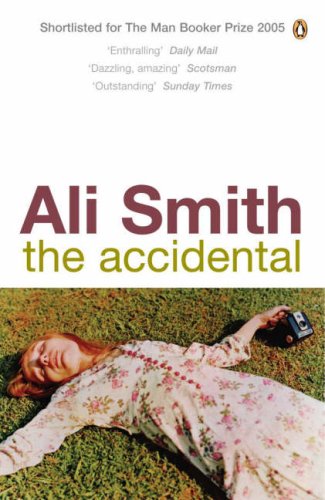
Ali Smith, "The Accidental"

 – Penguin Books, London 2005 ISBN 978-141-01039-7


Read from February 3rd till 21st 2016

My rating :


Do you recall those books that make your day (your week, your year J)? Those books that laugh at you from cover to cover without malice, reminding you that art is nothing but ludic, that the pleasure of the text (to borrow Barthes’s phrase) consists in blissfully and effortlessly enjoying both form and content? Those books that do you sooo good?

Well, for example David Lodge’s novels have always done this to me. And now, I’ve just delightfully discovered Ali Smith’s Accidental, another one of those friendly-reading books that teases the reader without superficiality, that discloses its narrative techniques without becoming annoying, that challenges both the writing know-how and the oh-so-serious literary themes without trivializing them and, more important without intimidating the reader. A book that doesn’t believe in complicated channels to deliver its message, although its message is far for simple. A postmodern book that doesn’t let you forget it is postmodern, but that doesn’t let you grow an inferiority complex because of it, either.

Friday, February 19, 2016

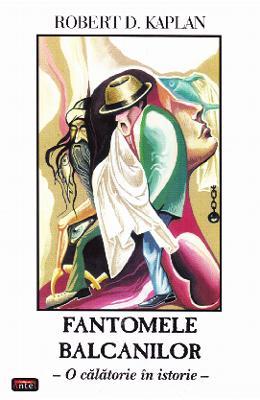
Robert D. Kaplan, "Fantomele Balcanilor: o călătorie în istorie"

 – editura Antet 2002, ISBN 973-8203-09-0. Traducerea Diana Grad. Titlul original : Balkan Ghosts : a Journey Through History


Perioada lecturii: 15 ianuarie – 17 februarie 2016

Votul meu:


Un tărîm al viziunilor înguste

Istoria m-a fascinat de cînd mă ştiu. Nu neapărat pentru „adevărul istoric” pe care mi-l oferă (la urma urmelor acesta e „in the eye of the beholder”, la fel ca frumuseţea sau ca adevărul ficţional), ci în primul rînd pentru personajele ei adesea halucinante, pentru atmosfera ei nostalgică sau terifiantă, pentru problemele etice, sociale şi (mai ales) estetice pe care le ridică. În fond, ce este istoria de azi dacă nu mitul de mîine?

Aşa că nici prin cap nu-mi trece să pun la îndoială exactitatea informaţiilor pe care Robert D. Kaplan le strînge cu acribie jurnalistică în Fantomele Balcanilor – nu numai că-mi lipseşte expertiza necesară dar, ca să folosesc o expresie franţuzească potrivită în context, je m’en fous comme de l’an quarante – în sensul că sînt atîtea chestiuni interesante pe care volumul le pune în discuţie încît las fără nici o remuşcare experţilor sarcina de a vîna micile imprecizii care e posibil să se fi strecurat în text.

Friday, February 12, 2016

Alexandr Soljenițîn, "Arhipelagul Gulag" - vol. I

 – e-book


Perioada lecturii
13 decembrie 2015 - 31 ianuarie 2016

Votul meu:


Homo homini lupus

Urmăresc cu interes de vreo săptămînă încoace o dezbatere furioasă în presa românească despre trecutul legionar al intelectualității noastre interbelice și despre felul în care ar trebui să ne poziționăm față de acest trecut, dezbatere care se reduce în fond la controversata întrebare: scuză certa valoare a unei opere pe omul lipsit de valori morale care a creat-o?

Nu am să dezvolt răspunsul meu categoric negativ la această chestiune (care oricum are marele defect, cum bine observa cineva, de a face confuzie între etic și estetic), ci am să mă opresc asupra unei alte întrebări pe care dilema în cauză a generat-o: care este mai gravă, crima antisemită sau  cea politică? Mugur Varzariu, într-o replică acidă la un articol al lui Andrei Pleșu, care între altele susținea că ar fi nedrept să se facă distincția între victimele holocaustului și cele ale comunismului, afirmă că una este să mori pentru o idee (politică, religioasă etc.) și alta este să mori pentru un lucru pe care nu-l poți controla (rasa). Care va să zică, dacă am înțeles bine, există crime nobile, justificate moral, si crime absurde, lipsite de rațiune.

Tuesday, February 9, 2016

Magicul, spectaculosul Québec


Et in Hiperboreea ego!

N.B. M-am hotărât să scriu acest articol în urma unei excursii  atît de minunate în orașul Québec încît  am simțit nevoia să o împărtășesc cu toată lumea. Nu vă așteptați totuşi la cine știe ce descrieri spectaculare (dacă vreți să citiți însemnări de călătorie adevărate vizitați blogurile  Cărți și călătorii sau Roșu vertical), talentul meu descriptiv e aproape inexistent, da’ promit să mă scot (oarecum) cu pozele, poze care au fost făcute de minunat de talentatul meu copil, Cassandra

Despre castelul de gheață din Québec auzisem încă de acum zece ani, adică de cînd am pus piciorul în Canada. Mai mult, pentru că în fiecare vară mergeam cel puțin o dată în frumoasa capitală a provinciei, fie cu ocazia festivalului medieval, fie pur și simplu pentru o échapée belle, de fiecare dată la întoarcere luam hotărîrea, la un pahar de vorbă cu prietenii, de a merge în iarna respectivă să vedem și castelul – e drept că la + 40 de grade părea o bună idee. La -30 însă, ne trecea tot cheful și uite așa în timp proiectata călătorie s-a transformat într-o simplă glumă de gașcă, de genul „unde nu mai mergem noi anul ăsta”. Aceasta pînă în decembrie anul trecut, cînd, povestindu-le amuzați prietenilor noștri quebecoși despre atîtea decizii luate și  amînate pe motiv de temperatură, au hotărît ei pentru noi că e timpul sa le onorăm.

Friday, February 5, 2016

Kazuo Ishiguro, "When We Were Orphans"

- Vintage Canada 2001 ISBN 0-676-97306-X


Read from January 19th to February 2nd 2016-02-03

My rating:


Still under the unforgettable impression of The Buried Giant, I admit that Kazuo Ishiguro’s When We Were Orphans did not live up to my expectations. Not entirely, at least. Oh, I enjoyed his habitual elusive style, also noticing the clever development of the theme announced by the title – the uprooting – and I couldn’t find any fault with the construction of the unreliable narrator also. It is the fable (in the sense given by the Russian formalists) I was disappointed with, the fable that, as someone very appropriately pointed out, is “too short and too spare for the content it hopes and promises to deliver.” (Valerie Jaffe, Fatal Ambition: Kazuo Ishiguro’s When WeWere Orphans ). However, two of three, that is style and narrative voice versus fable it is not so bad. Not so bad at all. Let’s see.

Wednesday, February 3, 2016

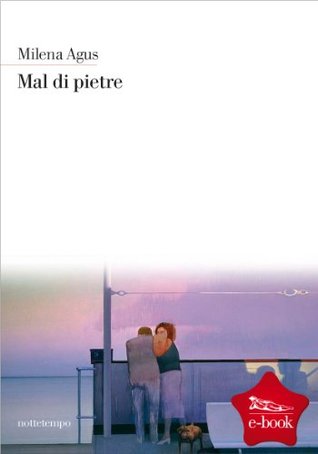
Milena Agus, "Mal di pietre"

 – e-book


Letto dal 19 al 29 gennaio 2016.

Il mio voto:


Non avevo mai sentito parlare di Milena Agus quando la mia amica Ema mi ha inviato Mal di pietre. Nonostante questo, ho cominciato a leggerlo subito, non solo perché la recensione di Ema era molto interessante (si può leggere qui, in rumeno J) ma soprattutto perché era in italiano e c’era un po’ che non leggevo niente in questa bellissima lingua et anche perché (lo dico con la vergogna appropriata, figuriamoci) non aveva molte pagine.

Frattempo ho saputo (evviva l’Wikipedia!) che l’autrice è un’esponente del gruppo “Nuova letteratura sarda”, che è insegnante d’italiano e che è diventata nota proprio con Mal di pietre, il suo secondo romanzo dopo Mentre dorme il pescecane.

Friday, January 22, 2016

Thomas Hardy, "Far from the Madding Crowd"

– e-book (Project Gutenberg)


Read from January 4th to 19th 2016

My Rating:


I still remember the Romanian edition of Far from the Madding Crowd in my mother’s library I was sometimes looking at in my teenage years only to put it away again, even after I read and enjoyed other Thomas Hardy’s writings (I had been pretty impressed with Tess d’Urberville if I recall correctly). Why I have avoided this classic despite its beautiful title at a time when I was reading almost whatever came to hand, I don’t know. Even now, had I not accidentally seen the end of the movie version (the Julie Christie one, who makes a very credible Bathsheba), I would have continued to ignore it, and what a pity it would have been.

A pity because this Hardy’s fourth novel is quite charming, with its Victorian themes and motives, like marriage, education, the role of the woman and the moral constraints in the middle-class society, reinterpreted in a new way, not only by emphasizing the role of the chance in the destiny of the individual, but also by studying how the same destiny changes whenever the equilibrium between reason and emotion is broken. From this point of view, the novel reminded me the four kinds of love identified by Stendhal in his essay On Love (which I don’t think the writer was familiar with, at least not at the moment of the book’s creation): passionate, mannered, physical and vanity-love.

Tuesday, January 19, 2016

Jeffrey Eugenides, "The Virgin Suicides"

 – Warner Books, A Time Warner Company, New York 1999 ISBN 0-446-67025-1
Read from January 3rd to 16th 2016
My rating:


What horizon of expectation does a clever title like The Virgin Suicides open (this in the improbable case you’ve never heard of the famous song of the equally famous band Cruel Crux J)? One could focus on the “suicide” word and think of Camus and his philosophical dilemma (whether life is worth living). Or one could be distracted by the “virgin” word, read with the image of pagan sacrifices in mind (on the altar of civilisation, of course). Or one could simply take “virgin” as the adjective it is, fully and unexpectedly (and without teenage connotation whatsoever) qualifying “suicide” , in which case the book is expected to reveal new, unthought-of meanings of the latter, that will divorce it either from “bravery” or “cowardice”, the usually accompanying words.

It is difficult not to suspect such intent, given that although the novel speaks of virgins (that is adolescents) that kill themselves, it is not about them, it is not about the Lisbon girls. Not really. It is more about our rooted habit to forget and replace the forgotten things with false memories. It is about the subtle but firm bans we let society to use in order to keep us on a short leash. It is about our deep fears masquerading as vulgar revelations and apparent misunderstandings that lead to no epiphanies. In the end, it is about suicide – by dull solitude and perfect indifference.

Friday, January 15, 2016

Professor X, "In the Basement of the Ivory Tower"

 – Viking Penguin 2011, ISBN 978-0-670-02256-4


Read from: December 1st 2015 till January 14th 2016

My rating:


The Elitism of Learning

When I left Romania, about eleven years ago, I decided to give up on teaching as well. After sixteen years of doing only this, it was not an easy decision to make, but I was so fed up with the corrupt system I was leaving behind that I had lost all faith in the generosity of my profession.

Of course, once a teacher always a teacher and although I’ve generally stuck to my decision and now I’m working full time in an office (finding my work interesting and challenging enough even after a decade or so) I couldn’t sever all the ties, so not only I have been teaching part time in various private language schools, but I’ve also shared my knowledge with my friends and my friends’ children whenever they needed to improve their French, English or even Italian skills. And, as a funny parenthesis, even today I say sometimes that I’m going to school instead of the office and now and then I dream I’m in front of a class again. Moreover, I asked for and obtained my teaching permit six years ago (I don’t know whether as a sort of back-up or simply because I am still a teacher at heart) and in order to renew it I followed five courses (3 credits each) last year, which made me better acquainted with the educational system here in Québec – and this is where I wanted to get, really, in order to discuss Professor X’s book, In the Basement of the Ivory Tower.

Thursday, January 7, 2016

Martin Amis, "The Pregnant Widow"

- Vintage International, New York, May 2011
    ISBN 978-1-4000-9598-8


Read from December 6th 2015 until January 2nd 2016

My Rating:


Martin Amis’s The Pregnant Widow is the first book I’ve finished in 2016 (I wanted to write “this year” then I remembered that once I had started a review with “this summer” and later, while re-reading it I had to investigate to learn what summer I was talking about J ) and what a good beginning it was indeed!

Maybe this is not Martin Amis at his best, but it was fun, despite the somehow gloomy title, inspired by Alexander Herzen’s dooming prophecy used as the first motto of the novel:

“The death of the contemporary form of social order ought to gladden rather than trouble the soul. Yet what is frightening is that the departing world leaves behind it, not a heir, but a pregnant widow. Between the death of the one and the birth of the other much water will flow by, a long night of chaos and desolation will pass.”